Monday, September 16, 2019

Magic Handles And Magic Glass

Apollo 9 capsule after splash down.  Of note, the alumni aluminum handles still intact.

(Edited with corrections and posted at Substack site:  https://georgebailey.substack.com/p/magic-handles-and-magic-glass)


NASA is in the business of making the impossible, possible.


Looking at the Apollo program in detail, downloading technical reports, examining images and reading the accounts of the astronauts themselves reveals the power of magic, myth and legend.  

To this day, NASA is hamstrung by this very Legend they created.  The mission to return to the moon has been met with one delay after the other.  And some of the delays in the Orion project involves issues that were supposedly solved by Apollo in the first place!  Things such as heat shields, radiation protection for the crew, space suits for EVA and a powerful enough launch vehicle to get to the moon and back.  These are mechanical and technical issues needed to be solved?  It’s all rather peculiar and feeds hay to the Apollo Hoax crowd who grows fat over NASA’s dithering. 

Many events of the Apollo era are confounding to understand.  It may be the majority of us who research it are not engineers or scientists.  A lot Apollo exploits appear to be a contradiction, or lacks common sense, and can appear to the layman or the hoax believer as a “got ya” moment.  It may just be a simple lack of understanding about how these systems work.  Or, it may be Black Budget technology being employed.  Something that will be forever out of reach in sussing out the truth.

Magic Handles
I first took note of issue of handles on the Apollo capsule in the Aulis article, Getting a Grip on Apollo 11, by Emanuel E Garcia, MD.  In this piece is noted that handles outside of the Command Module capsule are made of aluminum.  As stated by Dr. Garcia:

“As far as I can ascertain, the aluminum alloy used for the EVA handles was 2024-T3510 Aluminum, whose melting point is 1180 degrees Fahrenheit. For comparison’s sake, the melting point of Titanium is 3034 degrees Fahrenheit.”

Since reentry temperatures get as high as 5,000 degrees Fahrenheit, this far exceeds the heat tolerance of the handles.  When seeing the images of the capsule after splashdown the handles are intact.  So theoretically, the aluminum handles should have melted off.  However, upon reentry, the spacecraft was in the “hot zone” for roughly 6 minutes.  Maybe not enough time to melt the handles?  Only until an investigator with an oven producing 5,000 degrees of heat will we be able to know how fast the 2024-T3510 Aluminum can actually melt.

Magic Glass
But  aluminum handles are not the only thing past the heat endurance.  A NASA document I downloaded called, CSM06 Command Module Overview listed the heat tolerance for the outer windows at 3110 degrees Fahrenheit.  Once again, no windows melted upon reentry.  

Should not at least the windows been rated for more than 5000 degrees?  For for crew safety?  If those windows had been punctured from melting during reentry, the interior of the capsule would depressurized and the crew would have been incinerated in an inferno. 

But neither the handles nor the windows suffered enough damage to have a catastrophic failure. Not like the O rings on the Space Shuttle’s boosters.  So, were the handles and the windows fabricated from materials that are secret composites?  Classified?  Or were they just plain lucky?

There are a lot of things that went on in the development of the Apollo program where crew safety appears, if not actual, to be second place.  There were a lot of things that were not tested.  Nobody knew if the engines on the LM were going to function till they got to the moon—there was no test firing of the engines because every time they did, the engine would have to be rebuilt due to the corrosive contents of the fuel used.  Once in the factory after a cabin pressurization test of the LM, a window blew out.  The glass was vacuumed out of the cockpit and new glass was installed.  The second pressurization worked.  But there was no investigation as to the cause.  This should have been done for crew safety but was not.  

Getting to the moon was everything.

In Closing
So here is another mystery of the Apollo program.  Non melting handles and windows when exposed to high temperatures.  There are a lot of factors here such as the use of classified technology, exotic materials and the limited time in the not zone all be contributing to the mystery.  A hoax shouldn’t be the first and only answer we cling to.  With NASA, in the end, we can never really know for sure.


End Notes
Aulis states in their “Handles” article that Apollo’s 12 and 13 were the only spacecraft with no handles on the exterior.  They are are in error.  Both were fitted with handles as the pictures below indicate.

Apollo 12 after splashdown. 


Apollo 13 after splashdown.

Sources
https://www.aulis.com/handles.htm

Apollo Operations Handbook  SM2A-03-BLOCK II-(1)
https://www.hq.nasa.gov/alsj/alsj-CSMdocs.html

Apollo 12 handles
https://www.nasa.gov/image-feature/apollo-12-splashdown

Apollo 13 handles

https://history.nasa.gov/alsj/a13/images13.html

Thursday, September 5, 2019

The Right Stuff Never Stumbles

Gemini 7 astronauts Frank Borman and James Lovell.

(Edited with corrections at Substack:  https://georgebailey.substack.com/p/the-right-stuff-never-stumbles)


“The most miraculous thing was when they could get out of the spacecraft and not flop on their faces; and they could go up into the helicopter and get out on the carrier deck and walk pretty well. They were in better physiologic shape than the V crew. Initially, their tilt-table responses were not as bad and did not last as long. It looked more like four-day responses, by far, than eight-day. The calcium loss was the same way. Amazingly, they maintained their total blood volume. They didn't get any decrease, but they did it in a peculiar way. They lost the red-cell mass still, but they replaced the plasma-they put more fluid in. Apparently, there had been enough time for an adaptive phenomenon to take place.”
On The Shoulders Of Titans, p. 294

From sea legs to space legs.


The effects of weightlessness on the human body are well documented such as muscle degradation, calcium loss and other physical irregularities.  The problems do not end there.  Astronauts once returned to earth and gravity have a difficult time getting readjusted to having weight and mass and spatial orientation.  They can have trouble talking and have blood pressure issues.  Even the immune system can be compromised causing an astronaut to battle a minor infection.  In many ways it is similar to sailors getting their “sea legs” once back on land after being months at sea.  

Basically, zero gravity messes with your body.

Astronaut Samantha Cristoforetti.

As astronaut Samantha Cristoforetti after her 200 days in space said, “Your co-ordination, your balance, all the little tiny muscles that you don’t even know you have but that help you to sit upright and walk upright”—all that was gone.” This required her to experience weeks of rehabilitation after returning from space.  Walking was so difficult that Cristoforetti remarked that her legs felt like “tree trunks.”

Shuttle astronaut Dr. Anna Fisher remarked, “Also in your sensory canals there is a mismatch between what you’re feeling and seeing so it take a while to adapt not only to get your space legs when you come back you find you are actually walking down the hall at an angle because you have to recalibrate to not moving all over the place.”

These astronauts are examples of how prolong space travel affects them physically and the hard work required to get back to normal physical health.  

Space tourist Dennis Tito unable to walk after landing.

And lastly, space tourists.  So far the list is Dennis Tito, Mark Shuttleworth, Gregory Olsen, Anousheh Ansari, Rick Tumlinson and Guy Laliberté. None of them can walk or remove themselves from the capsule after landing without help.  Once removed they are placed in chairs and then toted off the landing field.  They are never seen walking away.  Most space tourists spend around 10 to 12 days on the ISS.  That seems to be enough time to stop their ability to move independently and orient themselves upon landing and returning to normal life. 

The Enigma Of Gemini And Apollo Astronauts 
Incredibly, the after effects of being in weightlessness had no noticeable effects on the astronauts of the Gemini and Apollo programs.  

The leading quote above is from page 294 of On The Shoulders Of Titans by Barton C. Hacker and James M. Grimwood.  The physical effects of returning to earth from space were well known to NASA early on.  After being two weeks in space there little trouble for Gemini 7 astronauts Frank Borman and James Lovell walking on the deck of the carrier the USS Wasp after stepping off the rescue helicopter.  The authors referred to it as a “miraculous thing” that they didn’t stumble and fall on their faces.  And finally ending with the quote, “Apparently, there had been enough time for an adaptive phenomenon to take place.”

What kind of adaptive phenomenon would that have been?  Seems like they are grasping for straws.  They have no answer for how these two men who spent two weeks in weightlessness, with no exercise, immediately upon landing could walk without a fuss.  Clearly, the adaptive phenomenon is not at work now.  Astronauts, cosmonauts and space tourists are incapacitated of walking upon landing. The alleged miracle is hung in the air, will never be officially answered, and it will remain as it is, a mystery. 

(Likewise, the other returning Gemini astronauts had not problem walking on a carrier deck after arriving from their respective flights.)


Apollo 8 crew after landing in 1968 after spending 7 days in space.

This ability to walk after along spaceflight, which apparently cannot be done now, is evident in the above photographs of the Apollo 8 crew stepping out of their chopper aboard the USS Yorktown.  There are many other photos of the astronauts being greeted by the captain and crew. Everybody is smiling and nobody is having any issues adjusting to gravity.  It is as if they never left earth.


Apollo 13 crew right after landing.
This ability to walk after along spaceflight, which apparently cannot be done now, is evident in the above photograph of the Apollo 13 crew stepping out of their chopper aboard the USS Iwo Jima.  There are many other photos of the astronauts showing them on deck during a prayer service, shaking hands with the Iwo Jima’s captain and officers and having a dinner with the officers and crew of the ship.  Everybody is smiling and nobody is having any issues adjusting to gravity.  It is as if they never left earth.

While their mission was cut short, lasting only 5 days, that is apparently enough time to disable the ability to walk upon return to earth.  This was experienced by Russian cosmonaut Viktor Gorbatko in 1967 who could not walk after landing from a 5 day mission.  Other Russian missions, such as Soyuz 9 in 1970, both cosmonauts after an 18 day mission could not walk till 6 days after landing.  Except for long stays on the ISS and select space shuttle missions, no NASA astronaut has these issues.


How did the astronauts walk on the moon?


In Closing
I am disappointed to conclude that it appears that the Gemini and Apollo Astronauts were not in space as long as has been officially reported.  The effects of zero G are well documented and known for over 50 years.  The idea that these astronauts, especially the Gemini crews, shown no evidence of physical problems makes no sense.  They should have had issues.  But we see these men returning from space without as much as a hitch in their giddyup.  This is the closest thing I have seen regarding fraud in the United States space program.  

 Astronaut Anne McClain being helped out of capsule after landing.

End Notes
Gemini 7 was launched in 1965 and at the time was the longest NASA space orbital mission lasting 14 days.

On The Shoulders Of Titans is an in-house NASA publication documenting the history of the Gemini program.

At the time of her interview, astronaut Samantha Cristoforetti set the 200 day record for the longest period in space for a European woman astronaut.  Record broken in 2017 by Peggy Whitson.

Zero Gravity and Microgravity are interchangeable.  It appears that zero-G has fallen out of favor.

Apollo 11 astronauts Neal Armstrong and Edwin “Buzz” Aldrin spent 6 days in space before landing.  Did the 1/6 gravity help them with walking on the moon?  Micheal Collins did not land but was in space for a total of 10 days.  He had no issues leaving the spacecraft for rescue or walking afterward.  But the space tourists spending 10 days in space do.

If it takes a year to travel to Mars, how are the astronauts going to walk when they get there?  They would need an artificial gravity system for the trip.  Is that in development?

Update

12/04/19
2006 Space tourist Anousheh Ansari’s blog describing not being able to walk after spending 11 days in space.
http://spaceblog.xprize.org/2006/10/05/second-birth/

12/02/19
"U.S. space agency NASA announced in June that it plans to allow two private citizens a year to stay at the ISS at a cost of about $35,000 per night for up to a month. The first mission could be as early as 2020."

We shall see of the latest batch of space tourists can walk after landing. 


http://news.trust.org/item/20191202002950-4ux9n

Sources
On The Shoulders Of Titans by Barton C. Hacker and James M. Grimwood.  Available free as a PDF from nasa.gov.  Kindle and paperback versions are available on Amazon.  

Samantha Cristoforetti
https://www.telegraph.co.uk/women/11708381/Record-breaking-astronaut-Samantha-Cristoforetti.html

Dr. Anna Fisher

https://www.telegraph.co.uk/science/2018/06/23/space-tourists-could-struck-astro-sickness-warns-nasa-astronaut/


Russian cosmonauts not being able to walk after landing.

https://www.aulis.com/apollo-soyuz13.htm

Thursday, July 25, 2019

Your AI Is Watching You


When your phone has a mind of its own.


I do journaling but only for “strange things.”  Strange things started happening when my mother passed in her sleep and vibe in the house changes, as it will someone dies in it, and while events have slowed down there are still incidences that I will continue to document.

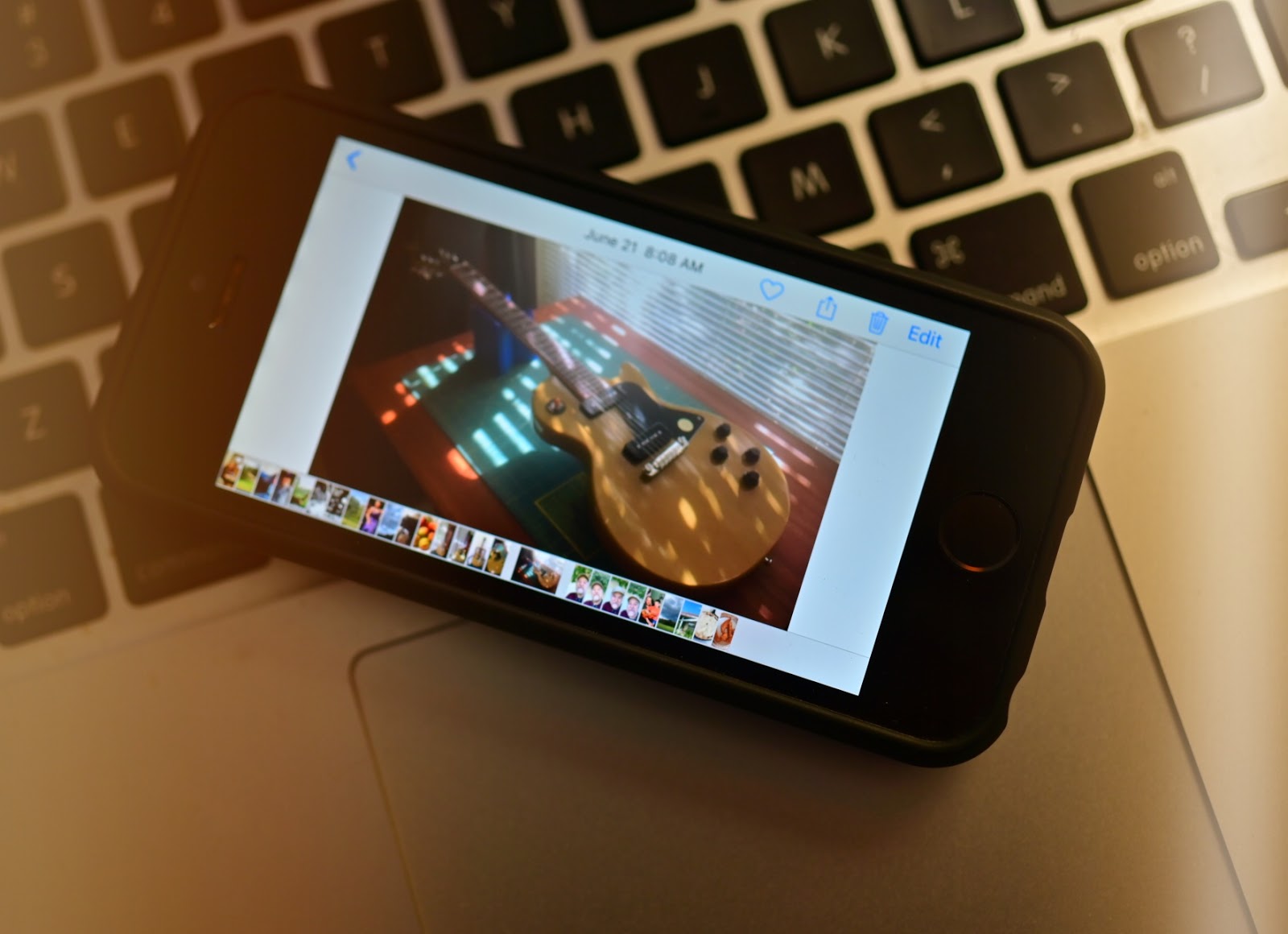
One recent example is when I looked at a photographer’s portfolio on Pbase and then a few weeks later one of his photos appeared on my phone.   I have no idea how it got there.  I didn’t view the photographer’s site on my phone, only on my Mac Mini.  I never web surf on my phone.  The phone’s WIFI is off, all the time.  And I only viewed his portfolio, which has about 25 or 30 images on a page and the photo was just one image off that page.  I did not download any of his images, it was just me looking at a page of pictures.  Nor do I interface my phone with the Mac, only my Macbook.  I do not use my desktop to recharge the phone or upload and download apps.  I did not view the portfolio images on my Macbook only on the Mac Mini.  

Another odd thing, in a list of many, is that the image was slightly blurred.  Perhaps the result of a compression routine being used to transmit the image from my computer to the phone?

I have no idea how this happened or the means to how it occurred.  I wondered if it could have been a virus, but then there is the problem of how the image flew thru the air to land on my phone.  I deleted the image, which I now regret, as it would be added proof (for me at least) that this strange event transpired. I routinely check the photographs on my phone from here on so see if other web site images appear.

Was somebody or some three-letter agency running a test? A test that accidentally leaked?  They keep tabs on us bloggers so maybe this was done on the hope I would post an article on the event? If so, it worked.  I assume there is black budget technology and a host of backdoors loaded on these devices. Government surveillance and law enforcement demand it.  I would have not known this happened except I intended to send a picture to a friend and that is when I discovered this image on my phone.  

This is not my only excursion into smart phone strangeness.  On three occasions during using the speech to text translator, my iPhone printed what I was thinking about rather than I said.  

For example, as I was replying to a friend’s text, I had been reminiscing about my grandmother who had passed away over 20 years earlier and the text printed was “grandmother.” Only that one word and nothing of what I spoke.  At the time I suspected there is more to the AI in these devices than has be released to the public.


So beware.  Big AI may be watching you.

Wednesday, July 17, 2019

Apollo for Dummys


Apollo for Dummys: Scale Mannequins and Miniatures in Apollo Imagery by Leonid Konovalov

Associate Professor Camera Department, Russian State University of Cinematography (VGIK)


Space research site Aulis has up a remarkable article by Leonid Konovalov showing persuasive photographic evidence for moon image fakery using models and mannequins.  I am not fully on board with this theory, but Professor Konovalov makes a compelling case for NASA moon video and still image shenanigans.

Sunday, July 14, 2019

Book Review: Fashioning Apollo by Nicholas de Monchaux


It’s An Empty Suit


Spacesuit--Fashioning Apollo is one of the most elegant and beautifully designed and printed books available.  It’s a paperback edition but the cover jacket has a smooth, rubberized coating.  It’s a pleasure to hold in one’s hands.  This is an experience that no digital book can ever match.  

Although published in 2011 by M.I.T. Press​,​ the information regarding the NASA spacesuits, with the emphasis on the Apollo suits is relatively up to date.  The author explores the development of spacesuits from the early pressure suits in the 1930’s onward to the space program of the 1960’s.  There is not much to be said in this book regarding spacesuits in the Shuttle era and beyond.  The author Nicholas de Monchaux does provide a good history of suit development for mankind’s reach for the stars.  

Since this book is published by the United States’s most distinguished science and engineering universities I was looking for various technical details that unfortunately, this book does not provide.  And that was the main reason I bought this book in the first place.  It is in fact, more of an easy reading account of spacesuit development for the masses.

Radiation

“NASA’s focus now is on sending humans beyond low-Earth orbit to Mars… We are trying to develop the technologies to get there, it is actually a huge technological challenge. There are a couple of really big issues. For one thing – Radiation. Once you get outside the Earth’s magnetic field we are going to be exposing the astronauts to not just radiation coming from the Sun, but also to cosmic radiation. That's a higher dose than we think humans right now should really get.”

– Dr Ellen Stofan, Chief Scientist, NASA, and principal advisor
to NASA Administrator – BBC Newsnight interview, November 2014

"Astronauts on the lunar surface could in reality be exposed to every kind of radiation – alpha, beta, microwave, x-ray, gamma, Bremsstrahlung, Cherenkov radiation, Askaryan radiation, high-energy protons and neutrons, galactic cosmic rays (GCR) and solar particle events (SPE)."

LUNAR GEOLOGY AND IONIZING RADIATION from a Revisionist Perspective

– Dr Bulcsu István Siklós


There are many hazards in space once people leave the safety of the protective magnetosphere of the earth and radiation is one of the main hazards.  It’s coming from everywhere and fills the vacuum of space.  There are cosmic galactic rays, gamma rays, x rays, charged protons and neutrons, just to mention a few.  The surface of the moon is basically a nuclear hazmat zone.  Even the famous moon dust is radiative.  That, coupled with extremes of heat and cold in a heavy vacuum, designates the surface of the moon a place where no life could ever exist.

My main interest was discovering the radiation protection in the spacesuits.  As it turned out, the book mentions nothing about it.  There is no documentation of radiation shield development, testing, or anything related.  Even the word “radiation” is not listed in the index.  The fact that 21 layers of various synthetic materials were used and not a single one has a reference to radiation in a book such as this, is a major omission.  On the contrary, it is not mentioned by NASA either.  One would think radiation shielding would be one of the most important aspects of a spacesuit, and it has no bearing in this book.  (It should be noted that the Apollo spacesuit manual, linked below, which can be downloaded from NASA makes no mention of radiation protection in the suit or helmet either.)

It is unconscionable to believe that the astronauts would be placed in such a hazardous environment without protection from one of the main hazards they faced on the surface of the moon--death by high energy particles. 

The multiple layers of insulation for thermal protection are documented, particularly the use of aluminized mylar which is listed for thermal protection.  So at least the astronauts had protection for heat over 200 degrees and cold temperatures of over -200 degrees on the moon.  But the development of this material gets no mention.   How was plastic and a metal bonded together?  How does it work to protect an astronaut?  How was it tested for this purpose?  The reader is never told. ​​Just as the beta cloth covering gets nothing more than a vague mention.

Is radiation shielding in the spacesuits classified?
Apollo spacesuit layers. Radiation shielding not listed. Image courtesy of NASA.


Don’t leave out the helmet!
Yes, it is left out of any mention in relation to spacesuit development and astronaut protection for the moon's hazardous environment.  If one reads the NASA Apollo spacesuit manual, it mentions the helmet being constructed out of polycarbonate.  In other words, plastic.  The visor assembly was polycarbonate as well.  Another fact that Fashioning Apollo makes no mention of since helmet development is ignored.

But the most distressing part of my own research into this matter involves finding that the spacesuit helmet has no thermal or lethal radiation protection of any kind, as so stated in the NASA spacesuit manual.  It does feature a beta cloth covering but that is just flame retardant cloth with fiberglass woven in.  It does not protect from the aforementioned hazards.  To be fair, the gold visor does protect the astronaut’s eyes from damaging ultraviolet rays but those rays are not life threatening.  It can hardly be expected for a thin layer of plastic to protect a person from the harmful radiation and severe heat and cold.  Why put thermal protection in the suit but ignore the helmet?  How the astronauts, if they actually walked on the moon, survived being there is a mystery.  A big enough mystery to strongly question if men actually landed there at all.

Do their heads not matter? 

In closing
There is so much more that could have been written in Fashioning Apollo to round out what the public can know about spacesuits.  The history of development is good but the author often jumps into fashion design of the 1950’s, how television works from the moon, JFK, the flight simulators, artist Robert Rauschenberg’s astronaut prints, and then leaves the reader in the lurch for the good stuff.  The radiation shielding should hold an important place in a book of this kind, but it is never covered.  

What is to be found here?  An empty suit.

Notes
Excellent article at Aulis by Scott Henderson--Apollo Space Suits: Shenanigans and Shortcomings. A must read on the space suit controversy.  

https://www.aulis.com/suits.htm

The Dangers of Space Radiation

LUNAR GEOLOGY AND IONISING RADIATION from a Revisionist Perspective

NASA Apollo Spacesuit manual

Thursday, May 2, 2019

How Amazon Uses The Echo To Influence Elections

Amazon Echo streaming device.

Florida Campaign ads appear on Oregon radio station?

Several nights in the fall of 2018 with the midterm elections looming I was using my Amazon Echo to listen to Ground Zero, hosted by Clyde Lewis.  His show is broadcast on KXL 101 FM based in Portland, Oregon.  I live in Florida.

Imagine my surprise when during one of the commercial breaks I heard ads for Democrat candidates here in Florida!  Those included Andrew Gillum, Senator Bill Nelson, Congresswoman Stephanie Murphy and Florida Senate candidate Kayser Enneking.  Of the four, only Stephanie Murphy would go on to win.

I never heard any ads for Republican candidates or Independents, only Democrats.  This follows in line with their bias against the Republican party.  In the election of 2016, Amazon featured jokes on the presidential candidates that a user could ask their AI, Alexa. Those jokes were only for Republican candidates—never any Democrats.  No Hillary or Bernie jokes.  I know, I tried.  Did they ever consider that more than Democrats own the Echo?  Apparently not.

Technically, I have no answer for how they did this.  I don't believe the Florida ads were being broadcast on KXL.  I assume Amazon had a way of inserting the ads into the ad rotation, externally.  I also tried another station that Ground Zero airs on, WGST (Atlanta), but did not hear any Florida campaign ads on that station.  I conclude they know what station I listen to on a regular basis on my Echo and targeted it.  They database all users of the Echo device and catalog lots of user data such as their phone numbers, address, most listened to radio stations, artists and so on.

I was only able to make recordings of only two candidates, Kayser Enneking and Stephanie Murphy.  

So finally, Amazon's attempt to influence the election cycle was a failure.  It will be interesting to see what they attempt in 2020.

You may go to Soundcloud link below to listen to them at Soundcloud:


https://soundcloud.com/geoguitar-1/sets/alexa-recordings


Wednesday, March 13, 2019

The Mystery of Apollo 13


Will We Ever Know the True Story On Apollo 13?

Jim Lovell’s book reads like an account of the movie Apollo 13 rather than a story of the actual event he participated in.   Some of the science in the book is flawed and some of it ranks as absurd.  In other areas the documenting of dialogue exchanges between the Apollo 13 astronauts and Mission Control are provably false.  I am at a loss to explain why this was done since Lovell and co-writer Jeffrey Kluger are supposed to be telling us the truth.  There are enough voices crying “fake” regarding the moon landings as-is and this book’s flaws just adds more reasons for their theories.

Center of gravity in no gravity…
Shortly after the fuel cells blew the Command Service Module (CSM) and Lunar Landing Module (LM) were thrown out of wrack.  The attitude control was thrown off and Jim Lovell’s job was to get the trajectory to conform to the flight path, which he accomplished after some difficulty.  

On page 148 in Lovell’s book it is stated that the added “weight” of the command module, coming in at 63,400 pounds, was causing the problem. It was actually stated that the attached CSM's weight which was throwing off “the center of gravity” of the ships.  Is there a center of gravity in no gravity?  Of course not!  Everything weighs nothing.  And how did the CSM suddenly gain weight in zero G?  Please note this is not an issue on a normal mission when the CSM is in control and LM is docked and not being used to transit to the moon.  

All of this is patently absurd.  Co-author Jeffrey Kluger, an otherwise good science writer obsoletely failed the readers with this nonsense.  It should also be noted in NASA’s Apollo 13 Mission Report, that none of this was ever mentioned regarding weight throwing off the guidance system.  I am surprised Jim Lovell let this go through, or anything such as this, is written in a serious book on this near fatal disaster.  After all, this book is a reprint of Lost Moon, originally published in the 1994, and this flaw, with a host of others, is in that book as well.  There clearly was enough time to correct this.

And to go even further, it is stated on page 225 that the added weight of the CSM was checked out in the flight simulator by two astronauts to see if it would effect the guidance system.  No problems found.  Of course not!  The very idea that they would be doing a test in a simulator when they have to know the CSM weighs nothing in zero gravity, is astonishing.  


(Also, the LM’s weight is never noted.  It was still weightless?  Of course it was as the CSM had to be.)

(None of this reported CSM weight issue is mentioned in NASA technical reports such as the Apollo 13 Guidance, Navigation, and Control Challenges report,  Apollo 13 Mission Report, and the Apollo 13 Flight Journal transcripts.  Links below.)

Pulling the bio-med sensors
Jim Lovell’s irritation with his biomed sensors and the removal of them made for a fine dramatic effect in the Apollo 13 movie, when actor Tom Hanks in the role of Lovell, ripped his off.  

However, it made for the worst part the book because the incident is falsely presented with an invented conversation between Lovell and mission control that never happened.  As the book describes, after Lovell removed the biomeds he was concerned that he would get a lecture by flight controller Vance Brand who supposedly knew he had done this.  He was not reprimanded but was told to turn off his biomedical transmission switch.  The fact is, this conversation is not recorded in Apollo Flight Journal transcript.  According to the transcript, Lovell was told by flight controller Joseph Kerwin to turn off the biomed switch in the LM to conserve power.   Nothing more.  Also, The Apollo 13 Flight Journal, states that once the CM was powered down, all biomed data from the astronauts was no longer being transmitted to NASA.  Brand, if he had actually talked to Lovell would have known this and would not have been able to detect that Lovell’s sensors had been removed.  Besides, at that point, the astronauts were not plugged in to any ports to upload the data.  However, they might have had wireless data transmission since the sensors were connect to the biomes belt the astronauts wore.  But this is unclear in any NASA documentation available. It is clear that to communicate with ground control, they had to be plugged in via a comm cable.

So, the incident as reported by Lovell and Kruger is false, according to NASA’s official transcript.  It is unknown why they would bear a false witness regarding this incident.  

Even the official report features odd flaws
Just as Lowell’s book features constant references to measurements based on pounds, so does the Apollo 13 Mission Report.  For example, it is stated on page 5-11, that 55 pounds of propellent was used for third stage buster separation. On page 5-13, before the command module was shut down, 14 pounds of water were transferred from the CM to the LM.  Overall, some thirteen pages of the report reference pounds as a measuring system.

I am surprised that in an official report such as this, the use of “pounds” being used as a unit of measurement while in zero gravity.  In zero G, how would they know the exact weight say, of water in a tank?  How did they measure 14 pounds of water in zero G?  There is no gravity, hence no weight.  In my research, I have yet to find an answer for this. I don’t see this questioned anywhere.  I also don’t know why the moon Hoaxer crowd hasn’t jumped on this as evidence of fakery.  After all, the only place pounds could be measured would be on a sound stage in Earth.

Even one of the electronic schematics is wrong, showing an output component with no input listed.  There would be no output without an input.

Question
Why are none of of the reviewers of this book on Amazon catching any of this?  

Will we ever know what happened?
Overall, Apollo 13 reads like a dumbed down account of what happened aboard this doomed ship.  Too much dramatic license is taken to the point of making things up.  It’s an insult to the brave men who nearly lost their lives, and to the superb group of technicians and engineers that helped bring them home safely.

The public which paid for the space program deserves the truth.  


Sources

Apollo 13, Jim Lovell, Jeffrey Kluger
https://www.amazon.com/Apollo-13-Jim-Lovell/dp/0618619585/ref=sr_1_2?keywords=Jim+lovell&qid=1552480406&s=gateway&sr=8-2

Apollo 13 transcript, Biomeds

The Apollo 13 Flight Journal

Apollo 13 Mission Report

Apollo 13 Guidance, Navigation, and Control Challenges, John L. Goodman
https://ntrs.nasa.gov/archive/nasa/casi.ntrs.nasa.gov/20090026451.pdf